How to ensure a scalable SASE architecture
OP-ED · 17 APRIL 2021
By Jérôme Beaufils · Lire en français
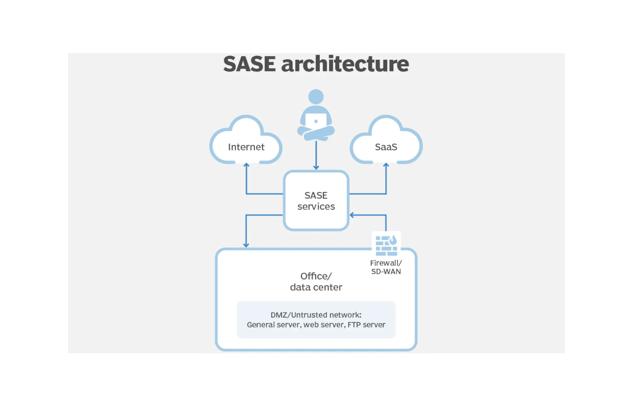
We live at a time when our traditional perimeter (office, firewall, VPN concentrators, switches, routers) is shifting towards remote work, bringing IT and corporate security challenges. Companies need an alternative, reliable and scalable way to secure access to digital assets. These circumstances create an opportunity to fill a growing gap in the market with the Secure Access Service Edge #SASE model
as a lightweight, innovative option.
Discover in this article the key factors in supporting a scalable SASE architecture.
1. Points of presence, to establish a geographical distribution of data centres wherever the PoPs are.
2. Technology stacks: cloud VMs and containers scaled per client.
3. Distance from the user to the PoP: with a cloud-based service, a user's traffic is first forwarded to the SASE provider's data centre (the PoP) and only then to its destination. The location of these PoPs close to the user's network is therefore essential for optimal latency and speed.
For more details, watch Episode 2: Internet SD-WAN vs SASE
4. Distance from applications to the user.
5. Office locations: Generic Routing Encapsulation and IPsec tunnels from existing routers and firewalls | SD-WAN hardware devices | proxy chaining.
6. End-user connection
through proxy auto-configuration (PAC) | through an agent | or remote access.
7. Agent integration.
>> Read the article >>
*Source: www.techtarget.com
Actualités & Médias